Method
How it works
Everything here rests on one pipeline, run at different scales. You do not need any of this to use the timing calendar — it is here so the numbers can be checked.
Six steps, start to finish
- 01
Collect the images
Museums publish specimen photographs openly. Software pulls the records, normalises them into one shape whichever museum they came from, and keeps each institution's licence and rights attached. Images are never copied — the museum stays the source.
- 02
Find the parts
Before anything can be measured it has to be located: the plant, the typed label, the colour strip, the packet holding loose seed. This runs without training data and reports how confident it is on each region.
- 03
Read what people already wrote
Collectors often recorded what the plant was doing. Where that sits in a proper database field it is taken directly; where it is only on the label, the text is read off the image. Each is graded by how much it can be trusted.
- 04
Have specialists score what is missing
No museum record distinguishes green fruit from ripe fruit — and that is the distinction control work turns on. People who know plants mark it up in a purpose-built tool, on specimens chosen to spread evenly across plant families.
- 05
Train and evaluate
Models are trained in Colab on those expert labels, hosted so they can be called from anywhere, and measured against a held-back test set no model has ever seen. Accuracy is reported against expert judgement, never against another model's output.
- 06
Publish as claims, not corrections
Botanists have always argued about identifications by adding a signed, dated slip to a specimen — never by erasing the last person's answer. Machine output joins that record the same way: labelled, dated, reversible.
What it is built on
Ordinary, well-supported parts, chosen so nothing here needs specialist infrastructure to keep running. Models are trained in Google Colab and hosted so they can be called over the web; the site itself is a standard web application with a managed database. Specimen images are served by the museums that hold them.
This matters for the year after the grant as much as during it. No part of the finished product depends on a machine that someone has to keep switched on: the timing calendar is published data, the reference library is images and measurements, and both stay online at essentially no cost.
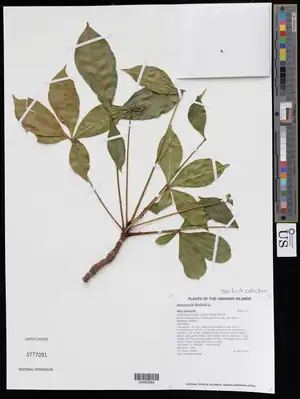
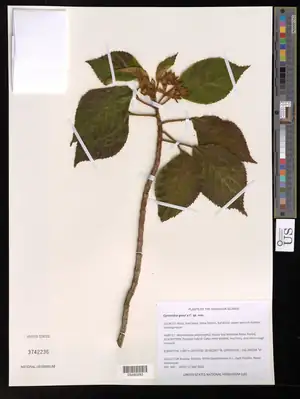
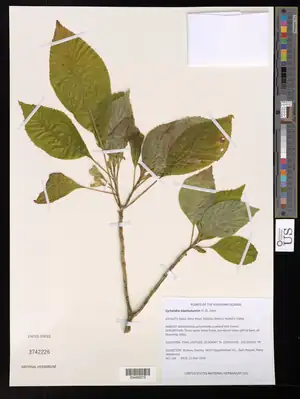
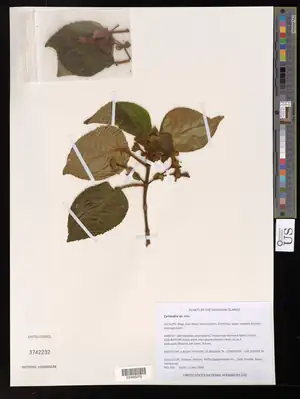
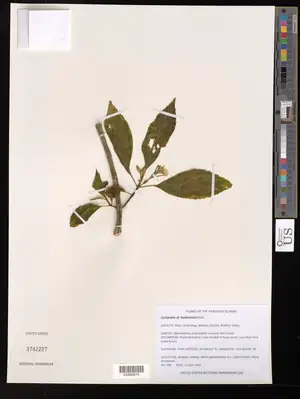
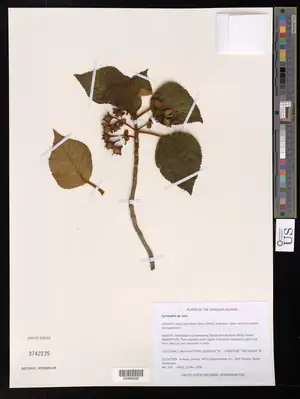
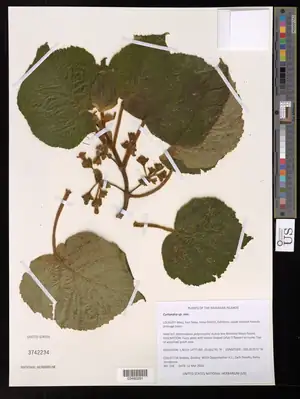
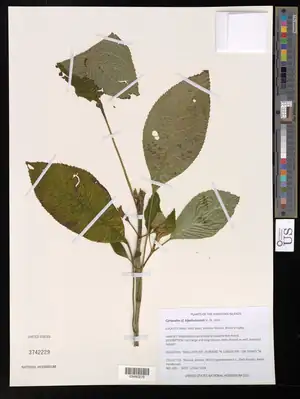
Real specimens, served by the museums that hold them · see all 2,100 →
 fruiting
 fruiting
 fruiting
 fruiting
 fruiting
 fruiting
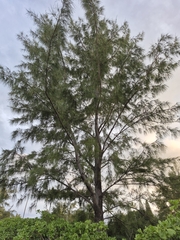
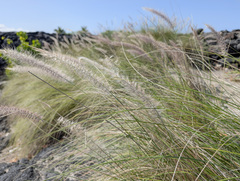
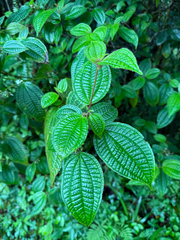
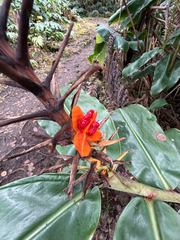
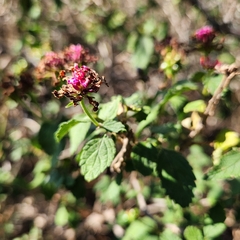
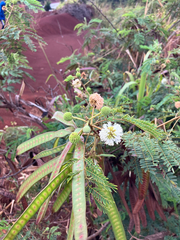
And field photographs, the second source the same pipeline reads · Mike Adkins, Eric Jain, Malena Lacque, Merav Vonshak and others, licensed under Creative Commons · see the coverage →
Five rules we hold to
- 01
Show the sample size, always
A monthly peak drawn from four specimens is not a pattern. Every species shows what it rests on, and thin evidence is labelled thin rather than drawn as though it were solid.
- 02
Grade the evidence
Timing recorded by the collector in a proper field, stated in field notes, or guessed by word search are three different qualities. They are kept apart and labelled. We tested the word-search shortcut and most of its results were wrong.
- 03
Never overwrite a person
Anything the software works out is added alongside the human record, marked as machine-made and reversible. It cannot quietly replace what a botanist wrote.
- 04
Keep the evidence where it lives
Specimen images stay with the museums that hold them. This project stores pointers, licences and a fingerprint of each image — so the work survives without anyone paying to host somebody else's collection.
- 05
Measure against experts, not machines
A model that copies an eighty-per-cent teacher scores a hundred per cent against that teacher and is still wrong one time in five. Accuracy here is measured against a held-back set scored by people.
The same pipeline, five scales
Seed identification and specimen timing look like two projects. They are one pipeline pointed at objects of different sizes, which is why a single year of work can deliver both. The hinge is the small envelope glued to a herbarium sheet: it holds loose seed, so finding it turns a collection of pressed plants into a collection of seeds.
- 00live
Collection
the cabinet
Aggregate structure: what is held, where the gaps are, which taxa and islands are represented and which are not. Nothing is measured here — this is the scale at which you learn what you cannot yet answer.
- 01live
Sheet
one mounted specimen
The whole herbarium sheet as photographed: plant, label, apparatus, ageing mount. Region detection happens here, and everything below depends on it — you cannot crop an organ you have not located.
- 02building
Organ
a leaf, a fruit, an inflorescence
Crops from the sheet, at the resolution where traits are actually measurable. Leaf area, margin type, herbivory, fruit maturity. This is the scale the sheet-level models squint at and miss.
- 03open
Propagule
a seed, a fruit, a spore
Loose reproductive material, imaged in its own right. Z-stacked seed photography at multiple orientations produces reference sets precise enough to identify an intercepted seed at a port of entry. The fragment packet on a herbarium sheet is where this material already lives, uncatalogued.
- 04open
Micro
a stoma, a trichome, a pollen grain
Features below the resolution of ordinary specimen photography. Stomatal density tracks atmospheric carbon; trichome and pollen morphology carry taxonomic signal nothing else does. Herbaria are an accidental instrumental record at this scale.